
Bamberg County Criminal Court Records
A criminal court record is not just an arrest note. It is the court file that begins once charges are filed or transmitted into the court process. In Bamberg County, adult felony and higher criminal matters are handled in Circuit Court, General Sessions. The Clerk of Court receives criminal warrants, transmits warrants to the Solicitor, receives bonds, manages juries, and keeps the court record. Lower-level criminal, bond, preliminary, and traffic-related matters may begin in Magistrate Court or Municipal Court before any later General Sessions filing.
The Second Judicial Circuit Solicitor is the prosecuting office for Bamberg, Aiken, and Barnwell counties. The Solicitor decides how prosecutable charges move forward, while the court record shows what was filed, heard, continued, dismissed, pled, tried, or sentenced. Charge-level detail is covered in Bamberg County arrest records and court charges; the criminal court record is the full case file and outcome record.
The Second Judicial Circuit Solicitor site is one source for the prosecuting office serving Bamberg County.
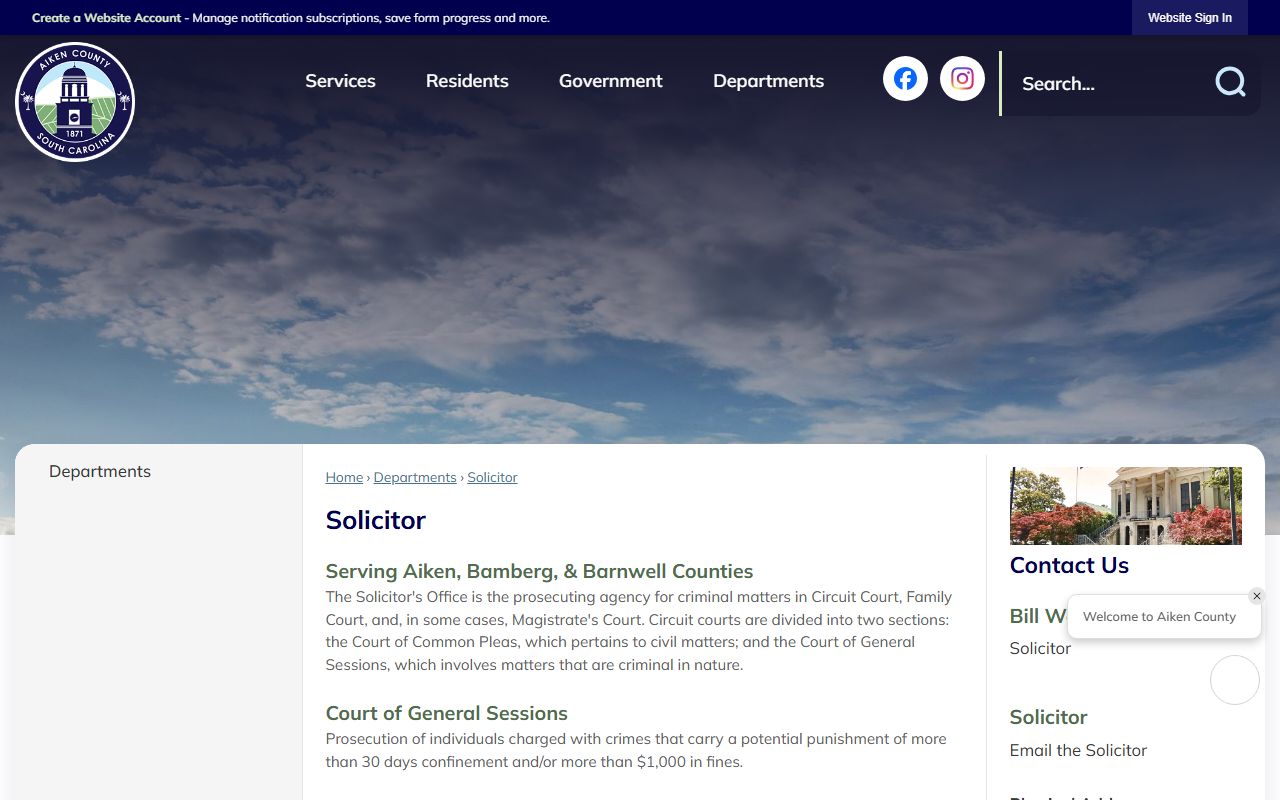
The Solicitor source helps separate prosecution work from the Clerk's role as keeper of the court file.
Search Bamberg County Criminal Court Records
Use the South Carolina Judicial Branch Case Records Search and the Bamberg Public Index for publicly indexed criminal court records. Search by case number when known. Name searches should use legal names and spelling variants because the Clerk of Court does not perform research or record checks for users. For a traffic or low-level summary matter, also check the Traffic Ticket Search or the Magistrate or Municipal Court listed on the citation. For an appeal, use C-Track.
- Open the South Carolina Judicial Branch case records search and choose Bamberg County.
- Search the Public Index by case number, defendant name, date range, and court agency where available.
- Review the court agency to see whether the matter is General Sessions, Magistrate, or another court level.
- Open the docket to read charges, bond events, hearings, disposition, and sentence fields where public.
- Contact the Clerk of Court if a certified copy, missing document, or sealed-record instruction is needed.
State criminal-history or sex-offender information is not the same as a Bamberg County criminal court file. South Carolina criminal-record reporting laws explain why some law-enforcement and court data can be reported to SLED, but the court record itself remains tied to the court that heard the case.
Bamberg County Criminal Case Flow
A General Sessions record can show the path from allegation to outcome. The flow may start with an arrest warrant or charge, then move through bond, solicitor review, indictment or other charging action, arraignment-related events, motions, plea or trial, disposition, and sentencing. Not every case has a trial. Many end by dismissal, plea, reduction, diversion, or other disposition.
Case flow: Charges Filed › Arraignment › Pretrial › Plea or Trial › Disposition › Sentencing
| Stage | What Happens |
|---|---|
| Charges Filed | Warrants, indictments, or other charge records enter the court process. |
| Arraignment | The defendant is advised of charges and the case moves into formal court scheduling. |
| Pretrial | Motions, discovery, bond issues, continuances, and solicitor review may appear. |
| Plea or Trial | The case is resolved by plea, bench or jury trial, dismissal, or other action. |
| Disposition and Sentencing | The final charge result and sentence, if any, are entered into the record. |
Aiken County hosts a Second Circuit Solicitor page describing the office as prosecuting criminal matters in Circuit, Family, and some Magistrate Court cases.
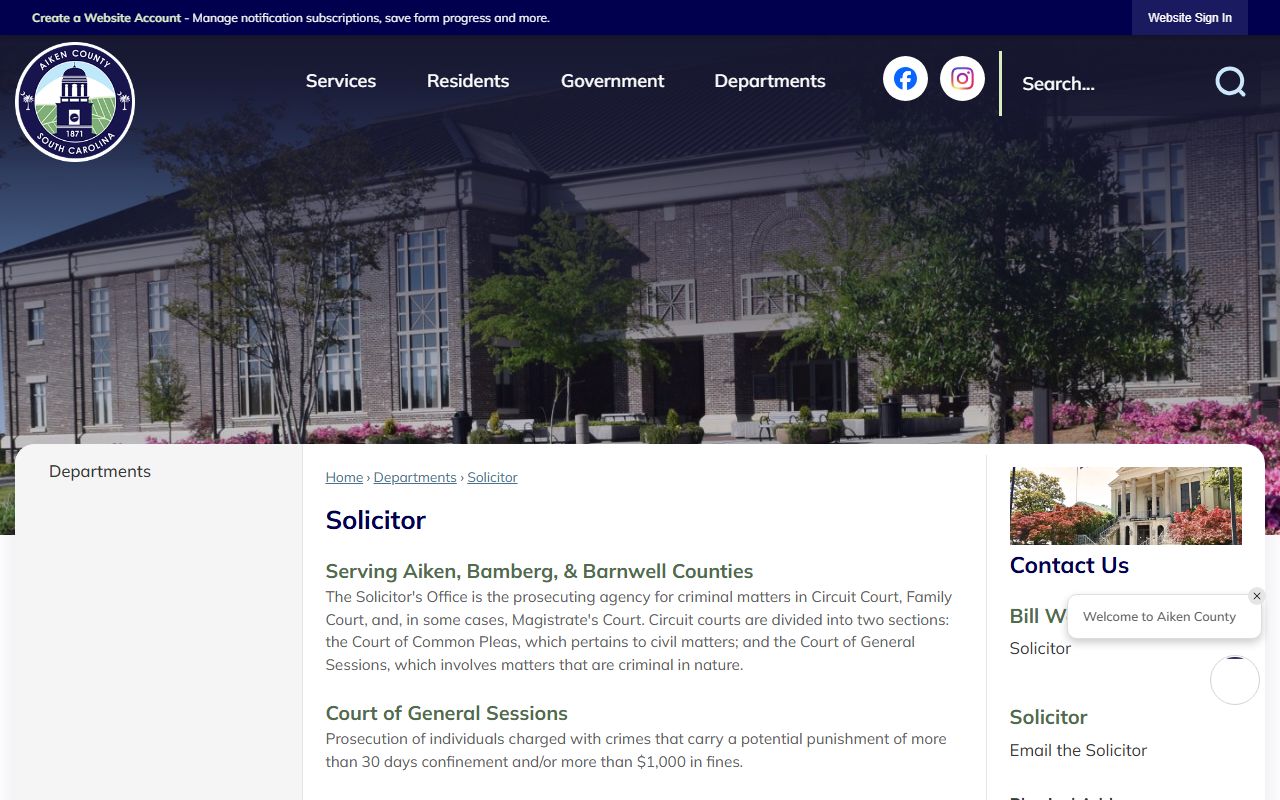
That circuit-wide source is relevant because Bamberg shares the Second Judicial Circuit with Aiken and Barnwell counties.
Bamberg County Criminal Record Fields
A criminal court record can include case number, defendant name, court agency, filing date, charge description, statute or CDR code, offense date, arresting agency, warrant number, bond amount or type, docket events, attorney names, judge, plea, disposition, sentence, probation terms, appeal events, and financial information such as fines, costs, restitution, or bonds. Online systems may show only part of the record. Certified or complete file copies must come from the clerk or court office.
| Field | What It Shows |
|---|---|
| Case Number | The court identifier used for Public Index searches and clerk copy requests. |
| Defendant | The person charged in the criminal case. |
| Charges | The offense descriptions, statute or CDR code, count numbers, and current charge status. |
| Bond | Bond amount, type, or event when entered by the court. |
| Plea | The defendant's formal answer, such as guilty, not guilty, or other plea entry. |
| Disposition | The final outcome of each charge, such as guilty, dismissed, acquitted, or nolle prosequi. |
| Sentence | Jail or prison time, probation, fines, costs, restitution, or other penalty after conviction or plea. |
Bamberg County Criminal Court Offices
The local criminal process can involve several offices. Law enforcement creates the arrest and incident side. Magistrate or Bond Court may handle initial bond and preliminary matters. The Clerk receives criminal warrants and manages the General Sessions court file. The Solicitor prosecutes the case. The public defender system may represent eligible defendants. The victim-witness/solicitor location source lists a Bamberg office at the courthouse.
The Second Circuit solicitor office locations page identifies local office access for the circuit.
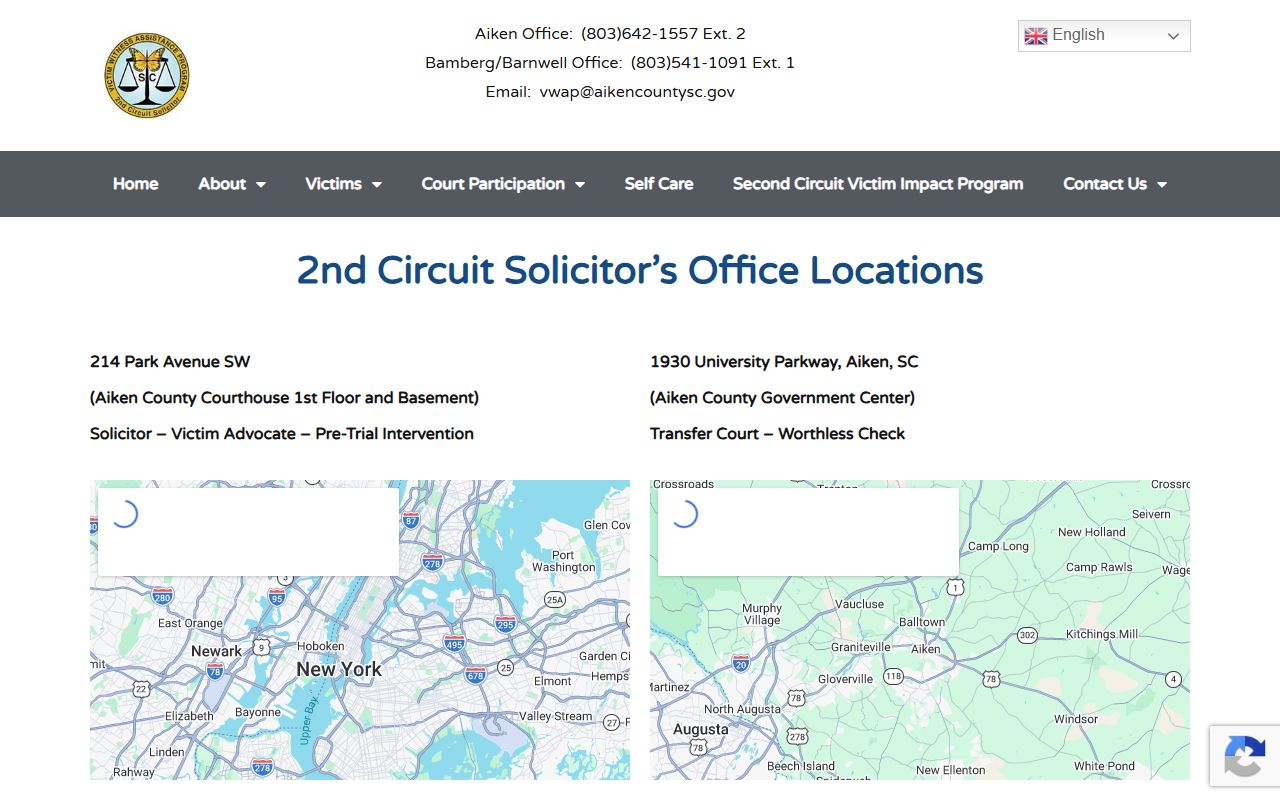
Office location details matter when a record question is tied to prosecution, victim-witness services, or court appearances.
The SCCID Bamberg County Public Defender page lists public defender contact information for Bamberg County.
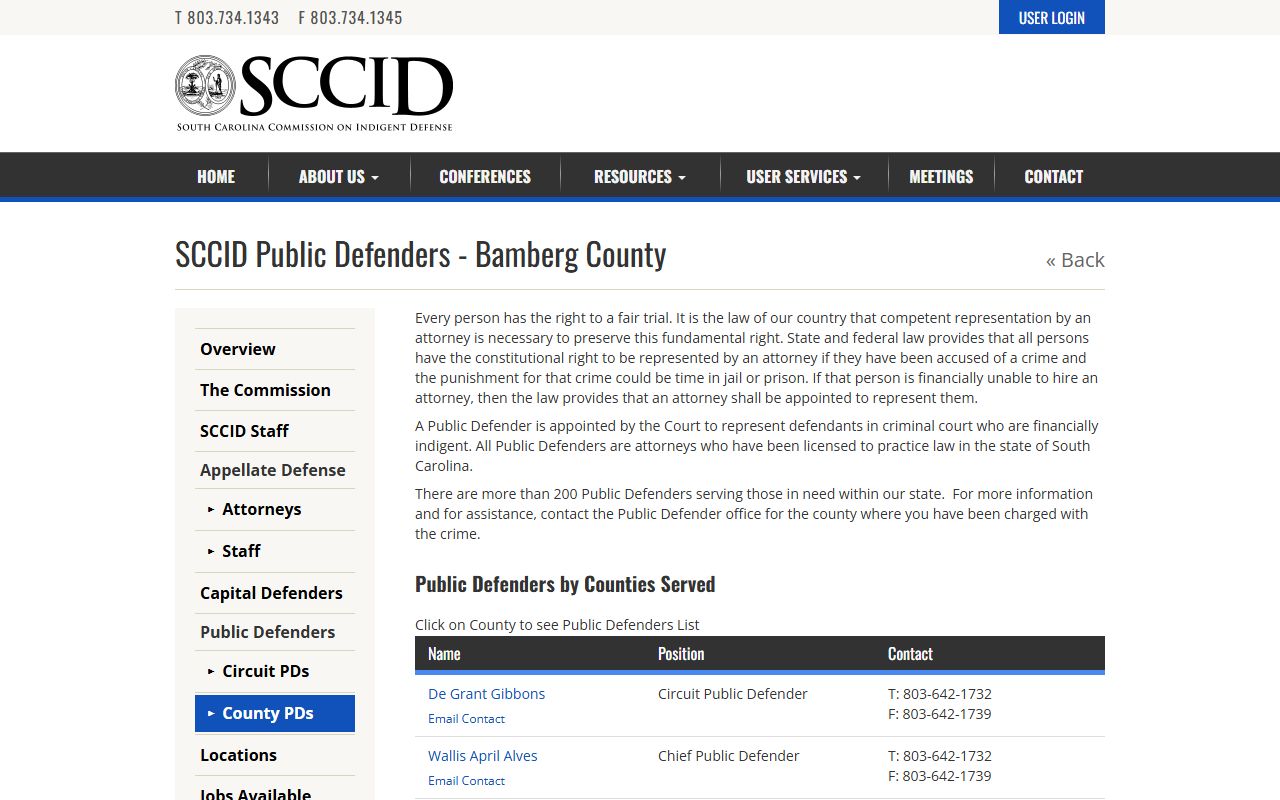
Public defender information is separate from public court access, but it is part of the local criminal case process.
Bamberg Criminal Charges vs Convictions
A charge is an accusation. A conviction is an outcome after a guilty plea, guilty verdict, or other qualifying finding. Bamberg County criminal court records may show charges that were dismissed, reduced, amended, or ended in nolle prosequi. Treat each count separately because one arrest or case can include multiple charges with different outcomes.
| Charge | Conviction | |
|---|---|---|
| Meaning | An allegation filed into the court process. | A final finding or plea that establishes guilt for that count. |
| Timing | Appears before final case outcome. | Appears after plea, trial, or qualifying final action. |
| Record reading | Check current status and disposition. | Check sentence, probation, fines, and appeal status. |
| Practical risk | Can be mistaken for guilt if read alone. | Still may be subject to appeal, expungement, or correction. |
Bamberg Sealed vs Expunged Records
Sealed and expunged records are not ordinary public records. A sealed record is hidden from public access by court rule or order, though the court may retain it. An expunged record is removed, destroyed, sealed, or suppressed as the expungement order and statute require. South Carolina expungement depends on the charge, disposition, sentence completion, prior record, and statutory category.
| Sealed | Expunged | |
|---|---|---|
| Public visibility | Hidden or restricted from ordinary public view. | Removed from public access as ordered. |
| How it happens | Court order, confidentiality law, or restricted case type. | Eligibility review and expungement order under South Carolina law. |
| Examples | Juvenile, adoption, protected family, or sensitive filings. | Some non-convictions, dismissals, first-offense summary convictions, or diversion completions. |
| Where to start | The court that sealed the record. | Solicitor or court process tied to the charge and disposition. |
Public Access to Bamberg Criminal Records
South Carolina FOIA supports access to public records unless a law exempts them, but criminal court access is also shaped by sealing orders, juvenile confidentiality, privacy redactions, and expungement law. SCJB also states that home address information no longer displays on the Public Index for new or existing cases beginning January 1, 2026. That means a case can be public while certain personal information remains hidden.
The SCCID circuit public-defender directory shows Circuit 2 public defender information.
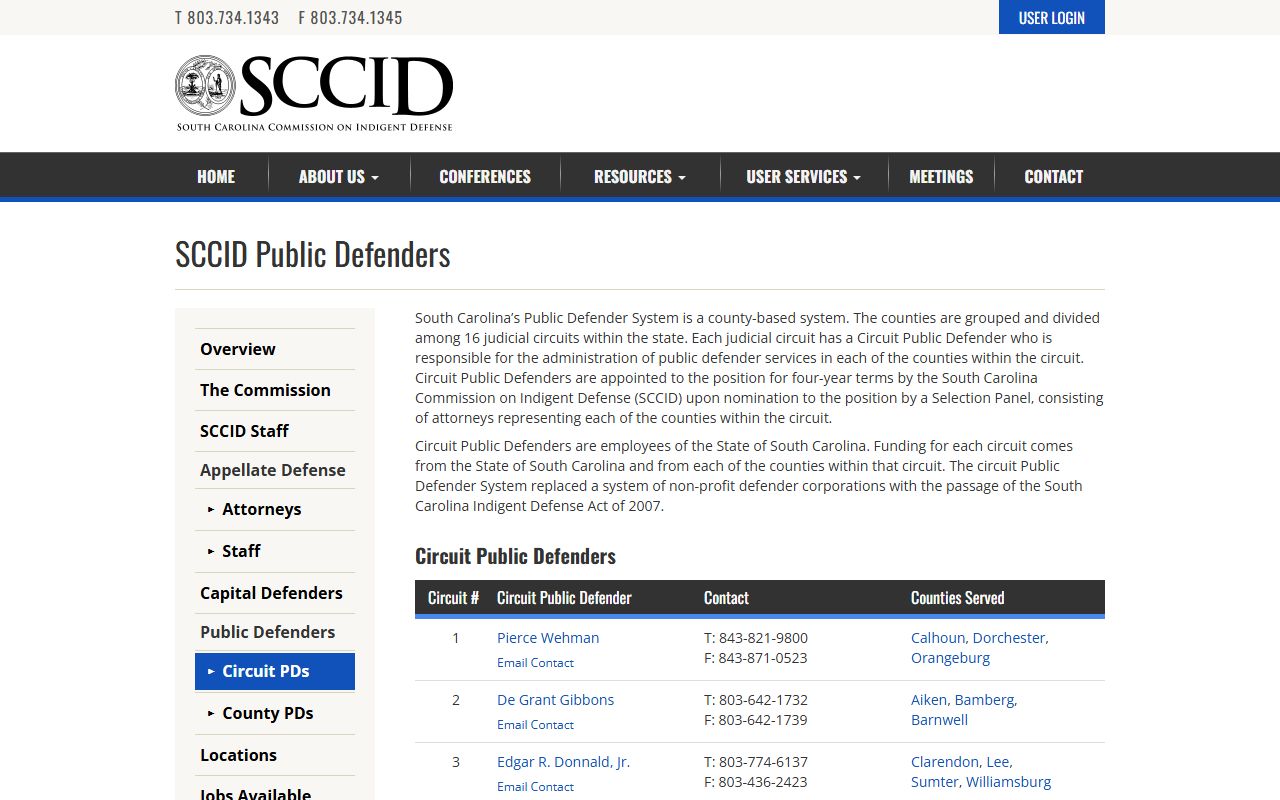
Defense counsel information is not a substitute for the court docket, but it helps identify the system serving Bamberg criminal defendants.
South Carolina bail and recognizance law appears in Title 17, Chapter 15.
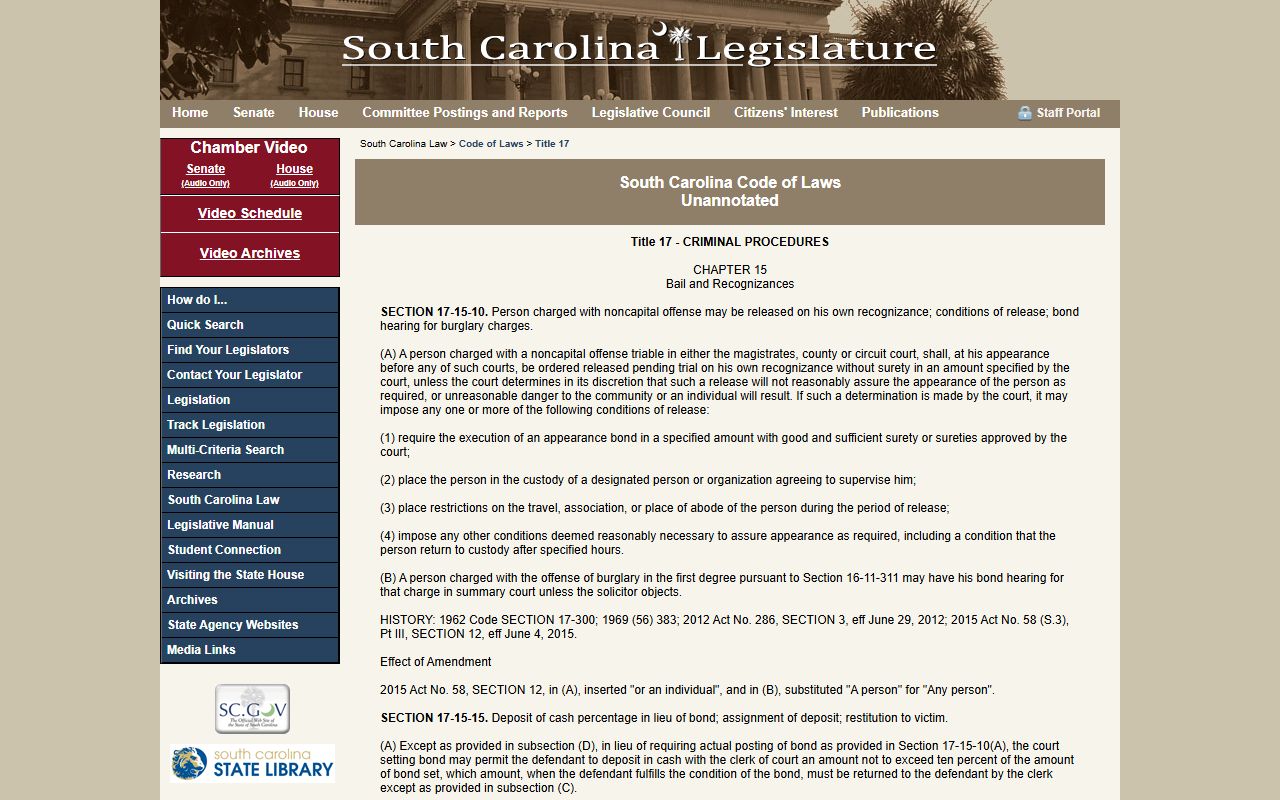
Bond events can appear early in a criminal court record before the case reaches plea, trial, or sentencing.
Restricted Bamberg Criminal Court Records
Juvenile records are restricted under South Carolina juvenile confidentiality law and should not be expected to appear like adult General Sessions records. Adoption, protected Family Court material, sealed criminal cases, expunged matters, mental-health records, confidential attachments, protected addresses, and some law-enforcement records can also be withheld or redacted. A person seeking access to a restricted file needs a court order or statutory authority, not just a case number.
For expungement, identify the exact charge, statute, disposition, sentence completion date, and prior-record history. For Bamberg County General Sessions charges, the Second Judicial Circuit Solicitor is the practical local office to check. For summary court cases, start with the Magistrate or Municipal Court that entered the disposition.
Note: A missing online criminal record may reflect sealing, expungement, court-level routing, or portal limits rather than no case.